Tts Online text to speech

Voice decisions

Choosing text to speech vs ai voice for your project

The answer to text to speech vs ai voice depends less on the label than on what you need the audio to do. Start with the script, audience, and delivery requirements, then compare actual samples rather than assuming either term guarantees a particular result.

Text To Speech voice creation visual

What the labels cannot promise

Neither category name tells you how a particular recording will sound or whether a particular service fits your project.

A label cannot certify natural delivery

An AI voice description does not guarantee convincing emphasis, pacing, or pronunciation. The same voice may handle one sentence well and stumble over the next.

WorkaroundTest a passage containing names, numbers, and the sentence you most need to sound right.

This comparison cannot confirm service terms

Usage rights, export options, access requirements, and limits depend on the service and may change. A comparison of approaches is not a license or product specification.

WorkaroundCheck the current terms and output options of the service you intend to use before publishing.

A visual cannot demonstrate audio quality

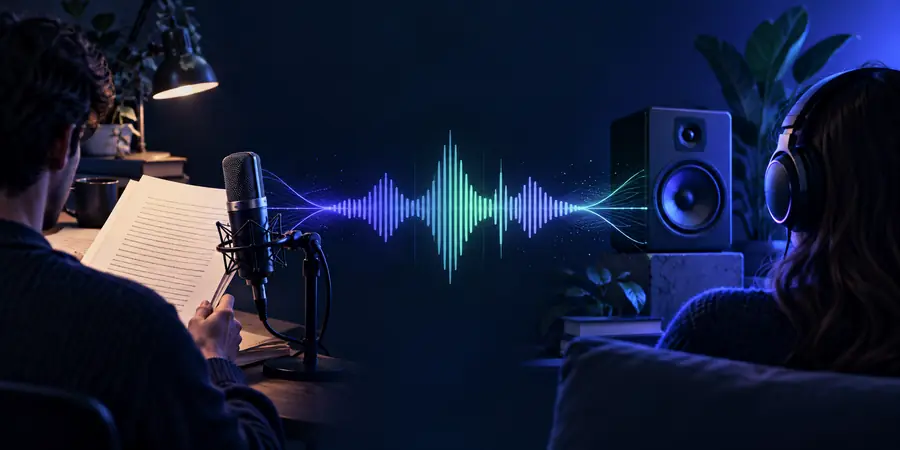
The image comparison below illustrates two workflows; it is not a listening test or evidence that one approach sounds better.

WorkaroundCompare recordings of the same script at a comfortable listening volume, ideally with your intended audience.

Three checks before you choose

Make the decision with one representative script, not a collection of unrelated demos.

Define the listening task

Decide whether the listener needs clear access to written information or a performed narration with a specific mood. Note where mistakes would matter: a proper name in a lesson, for example, or a flat opening line in a story.

Test the same short passage

Use identical wording for each option. Include a question, a pause-sensitive sentence, and any terms your audience will hear repeatedly; otherwise, differences in the scripts can disguise differences in delivery.

Review the usable result

Listen without looking at the interface. Mark pronunciation errors, awkward pauses, and lines that need rewriting, then check whether the available workflow and usage terms support your intended release.

Dimension by dimension

The terms overlap: modern text-to-speech systems may use AI, while an AI voice service may turn text into speech. The useful distinction is your goal, not a strict technology boundary.

Text-to-speech task AI voice goal
1

Primary question

Text-to-speech task

How do I make this written material audible?

AI voice goal

How should this spoken performance sound?

2

Typical starting point

Text-to-speech task

An existing passage that needs to be read aloud.

AI voice goal

A script paired with a desired delivery or voice character.

3

First quality check

Text-to-speech task

Intelligibility, correct words, and dependable pronunciation.

AI voice goal

Intelligibility plus tone, emphasis, and consistency of delivery.

4

Common revision

Text-to-speech task

Fix formatting, abbreviations, or words read incorrectly.

AI voice goal

Rewrite lines or adjust the approach when the delivery misses the intended mood.

5

Audience expectation

Text-to-speech task

Listeners can follow the information comfortably.

AI voice goal

Listeners can follow the information and hear an appropriate performance.

6

Typical fit

Text-to-speech task

Reading support, article narration, and spoken drafts.

AI voice goal

Character dialogue, branded narration, and expressive storytelling.

7

Important caveat

Text-to-speech task

Straightforward reading can still require careful editing and review.

AI voice goal

A voice described as AI may still deliver flat or inaccurate lines.

Who each approach suits

These examples turn the comparison into a decision about the listener and the finished recording, not a contest between names.

Accessibility editor

You have approved written instructions and need an audible version that preserves their meaning. Accurate terminology and an easy-to-follow pace matter more than dramatic character.

Start with the text-to-speech task, then review the complete recording for omissions and confusing phrasing. If your choice is between reading and a broader generation workflow, compare their roles directly.

text to speech vs voice generator

Independent storyteller

Your script includes dialogue and a deliberate shift in mood. Clear reading is necessary, but a flat delivery would change how the scene feels.

Test AI voice options against the lines with the strongest emotional demands. Keep the version that serves the story, even if you need to revise the script first.

text to speech for ai voice

Course author

You are turning lessons into spoken material and expect to update them. Students need consistent explanations, especially for names and technical vocabulary.

Prioritize a repeatable reading and review process. If the current approach makes corrections difficult, examine another online route against a revised lesson.

text to speech alternative online

Audio producer

You need a short narration to sit alongside other recorded material. The wording is settled, but the delivery needs to fit the piece as a whole.

Judge samples in context with the surrounding audio. Treat natural emphasis as a requirement, and keep a simpler reading option if expressive delivery introduces errors.

text to speech voices

Migration path: compare before you switch

Moving from straightforward reading to a performance-led workflow does not require replacing an entire project at once.

Start with a clear reading

Illustration representing a script prepared for straightforward spoken reading
Illustration representing a script evaluated for AI voice narration
Test the desired delivery

Keep your original script and test a short, representative excerpt first. Compare the resulting audio for accuracy and tone, record the changes needed, and switch workflows only if the improvement matters to your listeners. These illustrations show the decision path, not measured audio results.

Choose a voice for the work ahead

Put your script to the listening test

Take a passage that reflects your real project, including its hardest pronunciation or most important line. Explore voice options, listen critically, and confirm the current service terms before using a result in published work.

  • Compare the same words across options
  • Check both clarity and delivery
  • Review terms before publishing

Comparison FAQ

They can describe overlapping technology, but they emphasize different things. Text to speech names the task of turning written text into spoken audio; AI voice often emphasizes how a generated voice sounds or performs. A service can reasonably fit both descriptions.

Begin by checking whether listeners can understand the article accurately and comfortably. A straightforward text-to-speech workflow may meet that need, while a more expressive voice may help if presentation is part of the brief. Test the same paragraph before deciding.

No. Naturalness depends on the particular voice, script, and delivery, not the AI label alone. Listen for misplaced emphasis, unusual pauses, and mispronounced names in a sample from your own material.

The approach alone does not establish permission to publish. Check the current service's usage terms and any rights connected to the script or voice you plan to use. Review the finished recording as well, because a permitted output can still contain errors.

Switch when a representative sample shows that delivery affects the result your audience needs. If the existing recording is clear and appropriate, a new label offers little reason to change. If tone or consistency falls short, test a short excerpt before migrating the full script.

Create audio
Create audio